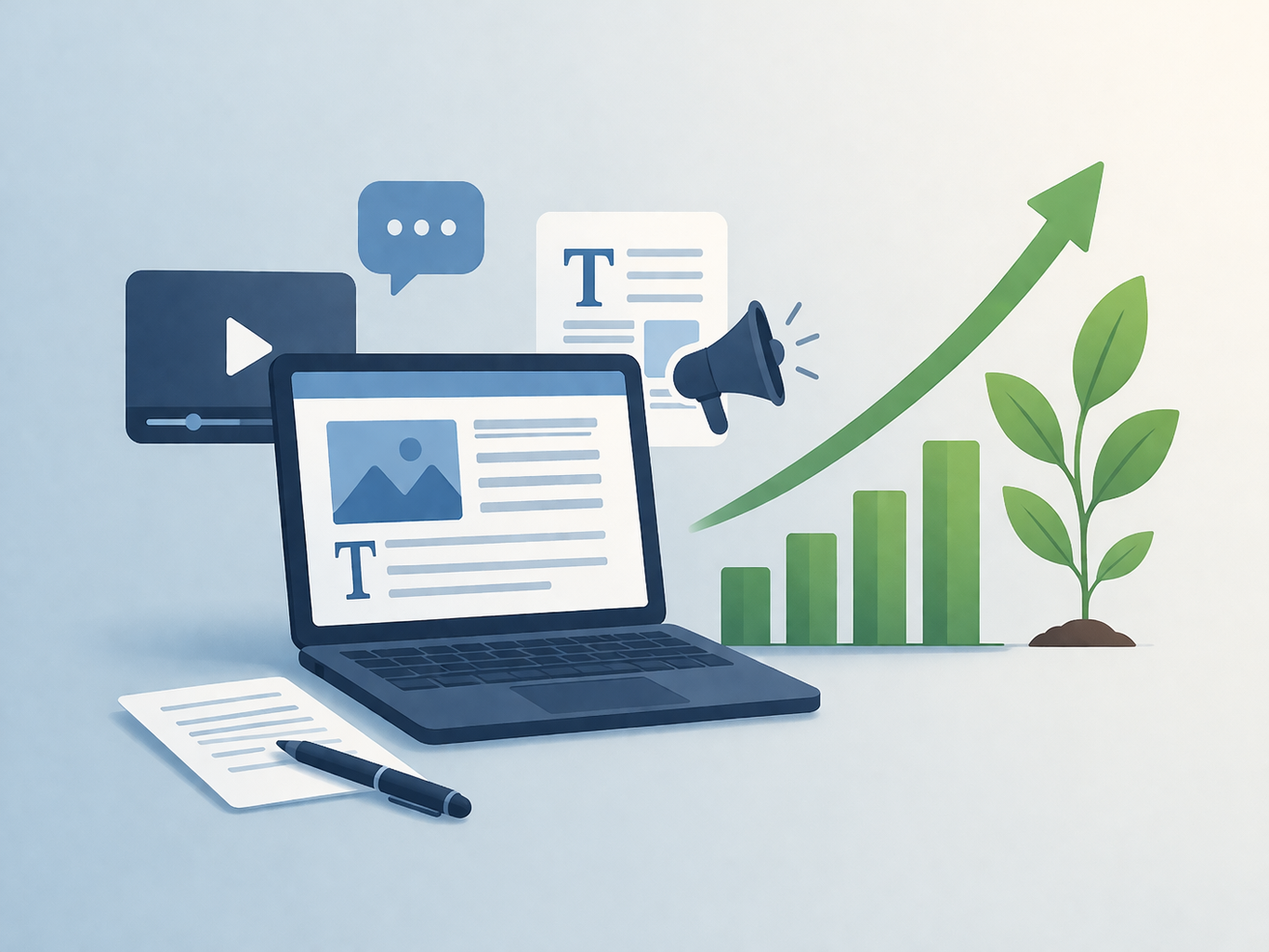
Sustainable organic growth does not happen overnight. It requires consistent visibility, trust-building, and meaningful engagement with your audience. Content marketing plays a central role in achieving all three.
When executed strategically, content marketing becomes a long-term asset that drives traffic, builds authority, and supports conversions without relying entirely on paid advertising.
Content marketing is more than publishing blog posts. It is about educating your audience, solving problems, and positioning your brand as a trusted expert in your industry.
Effective content helps:
As users repeatedly encounter helpful, well-structured content, trust increases. This trust often translates into enquiries and conversions.
Through our Content Marketing Services, businesses develop structured content plans that align with long-term growth goals rather than random publishing schedules.
To drive organic growth, content must align with search intent — the reason behind a user’s query.
There are typically three types of search intent:
An effective SEO content strategy includes:
Strong collaboration between content strategy and technical optimization — often supported by SEO Services — ensures your content ranks and performs consistently.
Publishing content is only part of the process. Measuring performance is essential for continuous improvement.
Key content performance metrics include:
Over time, well-performing content compounds in value. A single optimized blog post can generate traffic and leads for months or even years.
For businesses seeking a comprehensive growth approach, combining content with performance-focused Digital Marketing Services strengthens both reach and conversion outcomes.
Content marketing is a long-term investment that builds authority, attracts qualified traffic, and supports sustainable growth. Unlike short-term campaigns, its impact compounds over time.
With a clear strategy, search-intent alignment, and consistent optimization, content becomes one of the most powerful drivers of organic success.
© 2026 Uplift Azency